Interruptions are normal on a working set, so Stow treats them as normal. Two promises hold whenever a run stops early, whatever stopped it:
First: files already verified stay verified. Each destination keeps its own journal of what has been proven onto it, updated file by file as the run goes. An interruption cannot un-verify them.
Second: nothing half-written is left looking like a copy. The file in flight when the run stopped is deleted from the destinations rather than left as a plausible-looking fragment. A file either verified, or it is not there.
Pause is not an interruption. A paused card keeps everything it has checked, and Resume carries on from there.
Running the same card again
Drag the card in again with the same drives and Stow recognises it: the card says Part copied · resume. Add it to the queue and start as normal.

The resumed run does not copy blind. Before anything moves, each journalled file is read back from the destination and re-proven by checksum - never trusted on its name and size alone, because a size can match while bytes rot. On a big card that re-reading takes a while, and the bar says so:
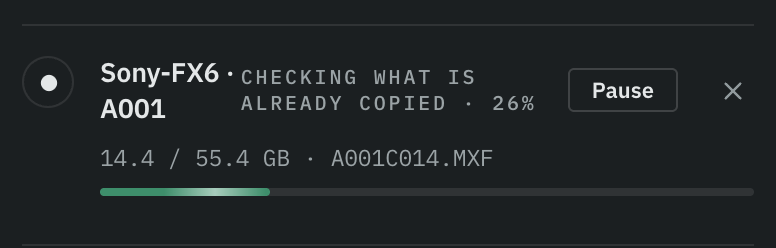
Files that pass are left untouched; files that are missing, short or wrong are copied afresh. The finished verdict covers the whole card - everything on it, whichever run copied it - so green still means what green always means.
Resume, or copy only what's new?
They sound similar and answer different questions. Resume finishes an unfinished session: same card, same destination folder, the verdict covers the whole card. The offload log's offer is for a finished card that came back with new footage and is heading somewhere new - it skips what an earlier session copied, and its verdict covers only that run's files. That one has its own guide.
If the interruption was a drive dropping out, the card's report names the destination that dropped and what to do: reconnect it and run the same card again to top up the missing copy. Until then the card is not safe to format, and Stow says so rather than letting one copy pass for two.
Stow is free for macOS and Windows. If you have not tried it yet, the download is here.