
Want to make your company’s videos look polished, cinematic, and scroll-stopping? Mastering lighting is the fastest way to level up your video marketing.
Whether you are a marketing director planning a corporate promo or a CEO preparing for an on-camera interview, the way your scene is lit can make or break the visual impact of your message. In this guide, we will explore the professional lighting techniques we use in video production to instantly improve your video quality, build trust with your audience, and drive better ROI for your business.
Why Lighting Matters in Video Production
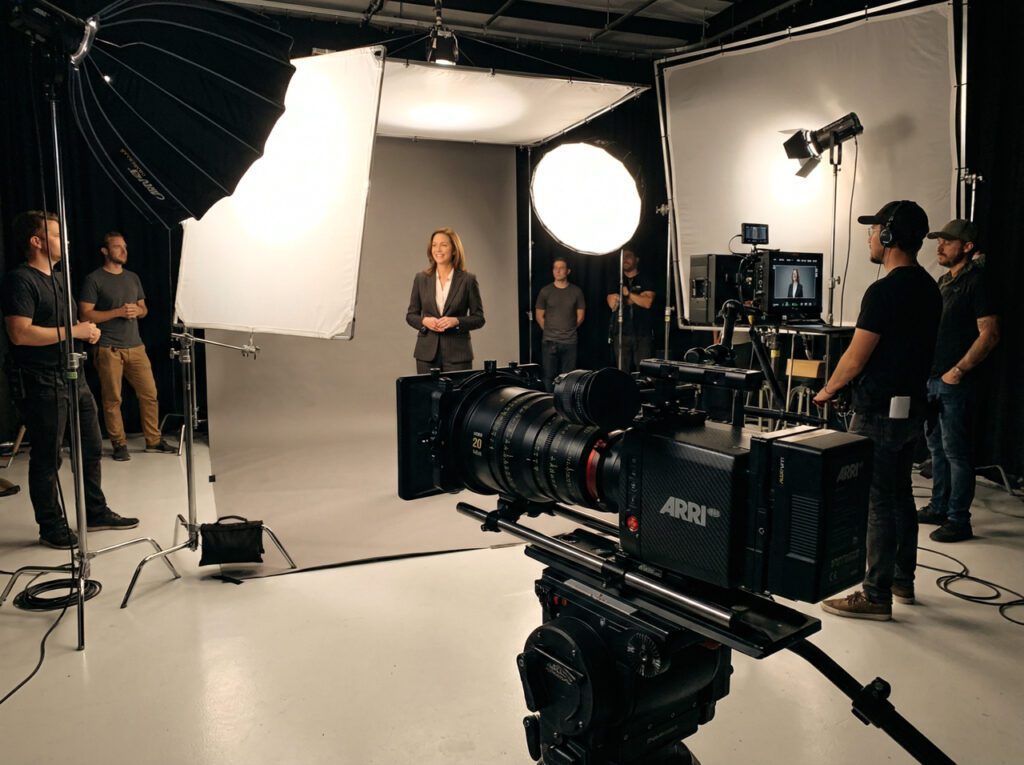
Good lighting is more than just making sure the camera can see you. It is a powerful storytelling tool. Here is how strategic lighting elevates your brand’s video content:
- Boosts Production Value: Clean, intentional lighting instantly makes a video look expensive and authoritative.
- Sets the Mood: From soft and welcoming to stark and dramatic, lighting shapes the emotional tone of your message.
- Enhances Focus: It directs the viewer’s eye exactly where it needs to be, whether that is your spokesperson’s face or your flagship product.
- Builds Trust: Professionally lit videos signal credibility, which is crucial for branded content and marketing.
Essential Lighting Techniques: The Industry Standards We Use
You do not need to be a lighting technician, but understanding the basics of how a professional video team sets up a shot can help you articulate the look you want for your brand. Here are the core techniques that guarantee high-quality visuals.
Three-Point Lighting: The Industry Standard
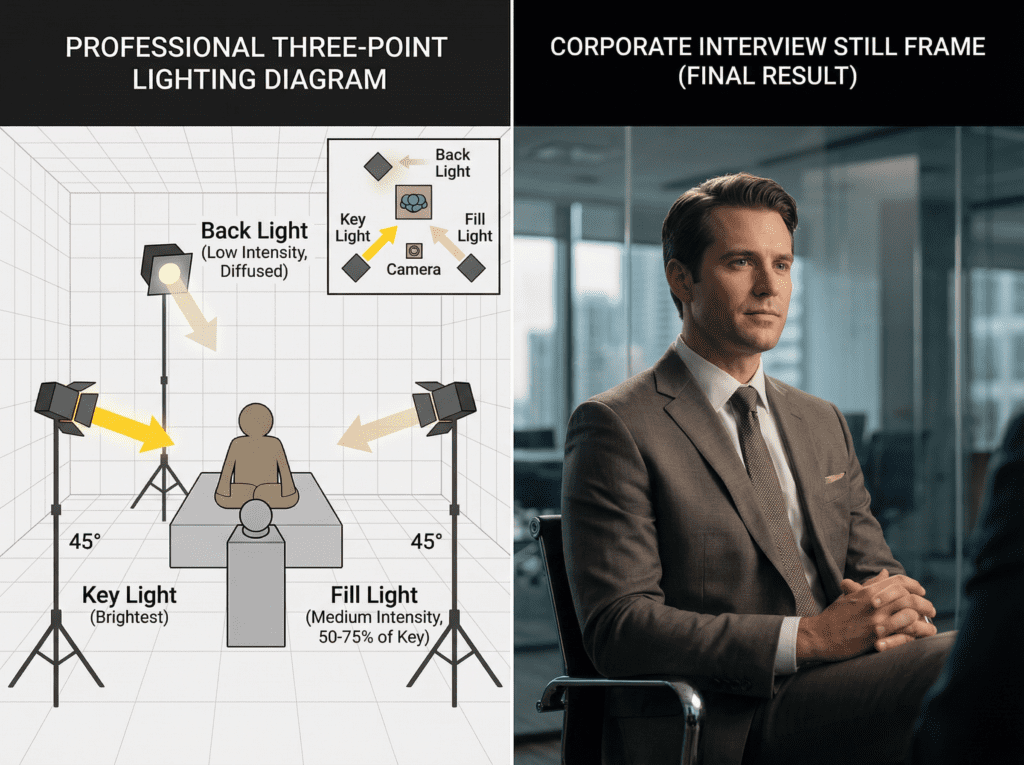
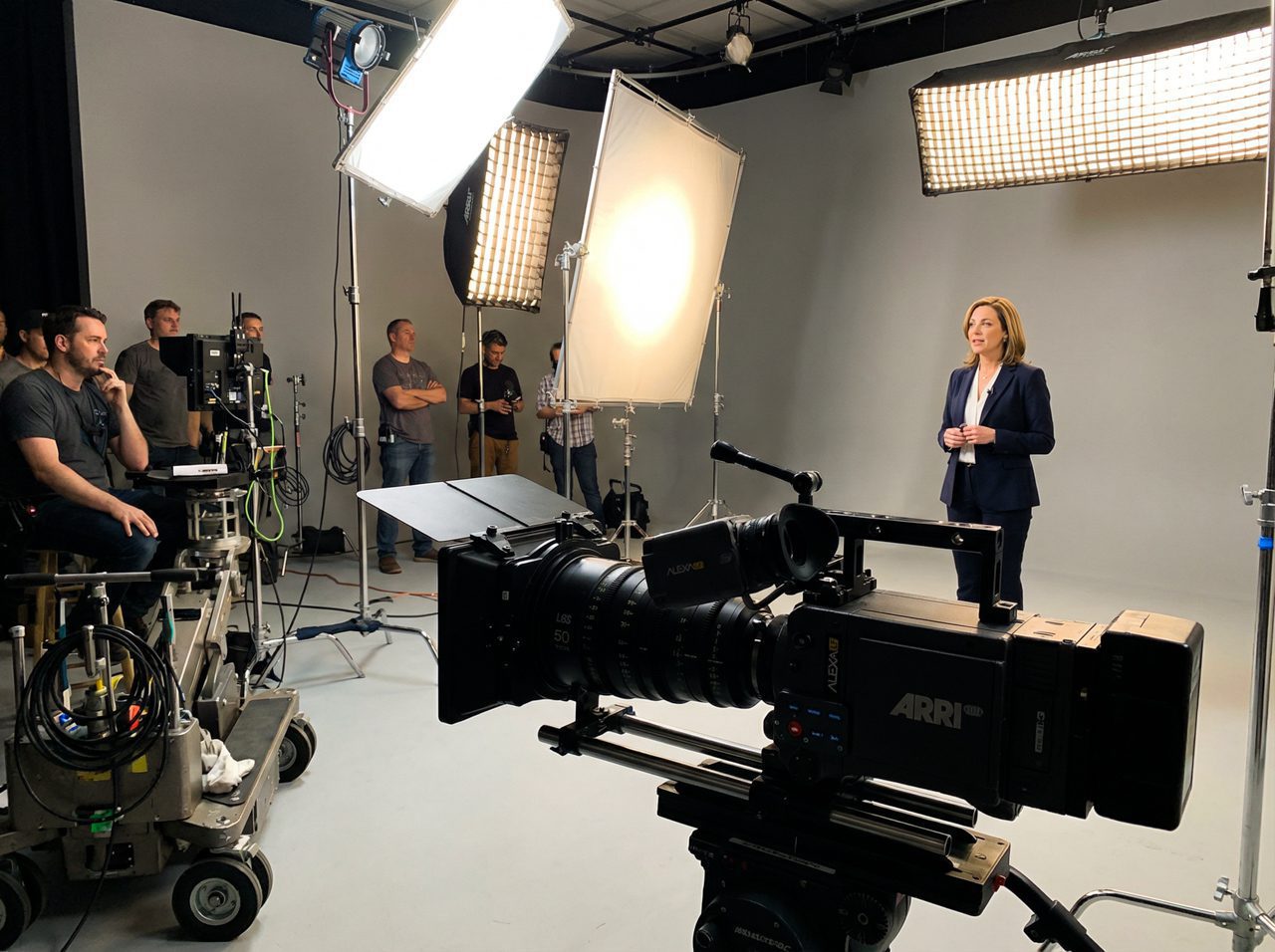
If you have ever wondered why executives look so natural and dynamic in high-end corporate videos, it is usually thanks to three-point lighting. This setup gives the subject perfect depth and dimension:
- Key Light: The main source of light, usually placed 45 degrees from the subject to brighten the face and establish the look. Today, we often use powerful COB (Chip on Board) LED fixtures for a flawless, continuous key light.
- Fill Light: A softer light placed on the opposite side to reduce harsh, unflattering shadows.
- Backlight (or Rim Light): Positioned behind the subject to create separation from the background, adding a three-dimensional, high-end feel.
Light Colour Temperature: Warm vs. Cool
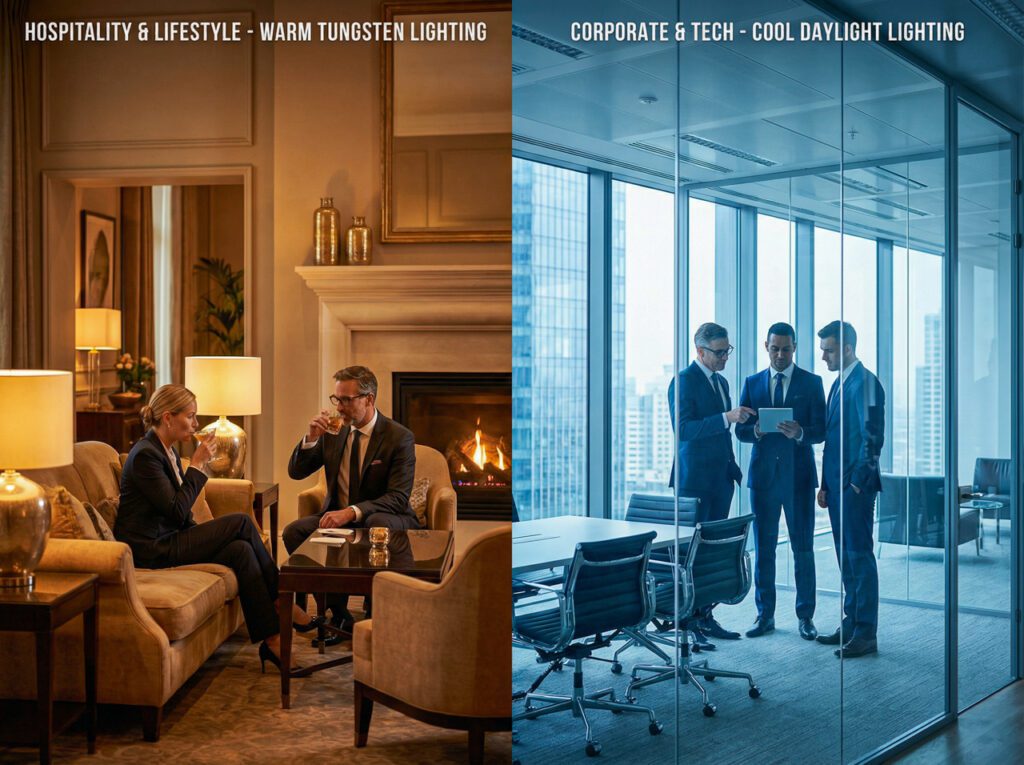
Light temperature, measured in Kelvin (K), subtly affects how your audience feels about your video:
- Tungsten (approx. 3200K): Warm and orange-tinted. Great for cosy, intimate branding or hospitality videos.
- Daylight (approx. 5600K): Cool and blueish. Ideal for crisp, modern corporate environments and tech explainers. A professional crew ensures these temperatures are perfectly balanced using modern high-CRI (Colour Rendering Index) lights so skin tones look natural, avoiding the sickly or mismatched hues found in amateur videos.
Soft vs. Hard Light: Know the Difference

- Soft Light: Gentle shadows and flattering skin tones. This is our go-to for corporate interviews and testimonials, ensuring your spokespeople look approachable and flawless.
- Hard Light: Sharp shadows and high contrast. We use this for edgy, dramatic, or stylised commercials where your brand needs to make a bold statement.
Creative Lighting Techniques for Impactful Videos
Want your video to stand out in a crowded social media feed? We use specific, trending lighting styles to match your marketing goals:
- 1. Butterfly Lighting: A favourite in beauty and premium fashion. By placing the key light slightly above the subject, it creates a sculpted, elegant look perfect for high-end brand messaging.
- 2. Ring Light: Still incredibly effective for social media-focused content. It delivers even lighting and a signature circular catchlight in the eyes, great for close-up, direct-to-camera social campaigns.
- 3. Gobo Lighting: If we are filming in a plain corporate boardroom, we can place cut-outs (a “gobo”) between the light and background to project patterns, like window blinds or abstract shapes, adding instant texture to a boring room.
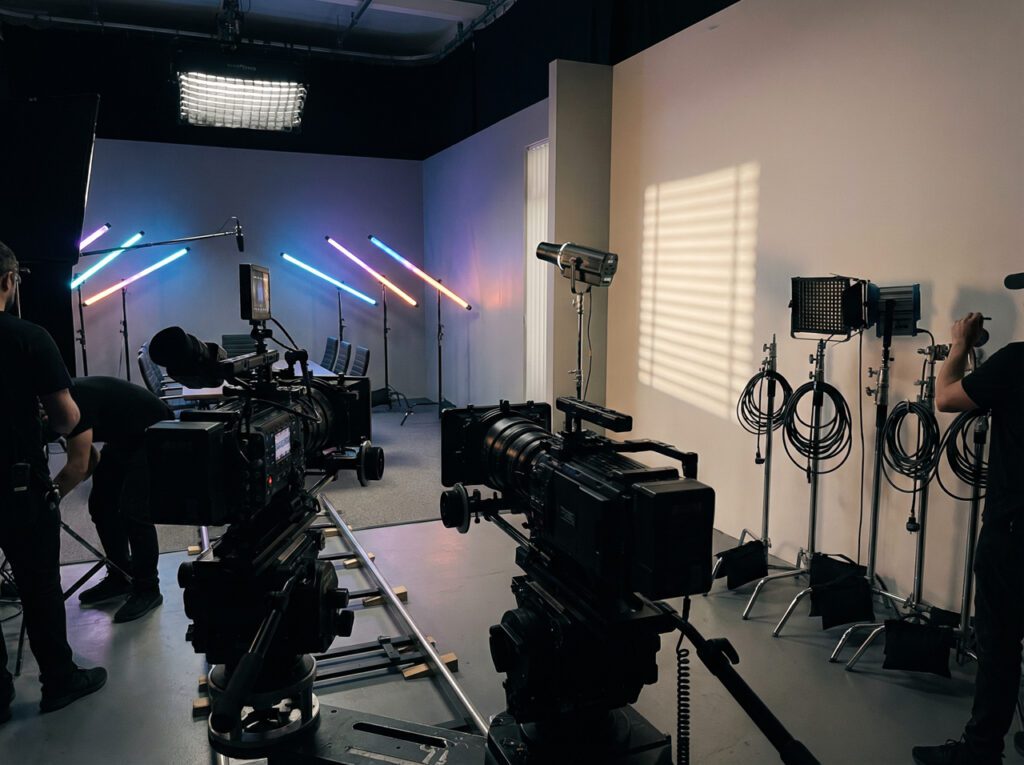
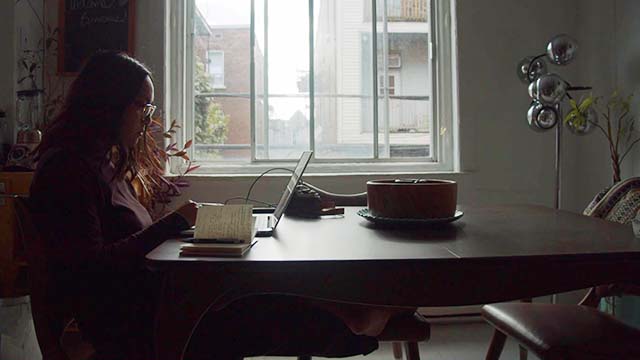
- 4. Practical Lighting: We often incorporate visible light sources within the scene, like stylish lamps or computer screens, to enhance realism and add depth to “day-in-the-life” recruitment videos.
- 5. LED & RGB Lighting: Using the latest app-controlled RGBWW pixel tubes and panels, we can wash your background in your exact brand colours, subtly reinforcing your visual identity and creating moody, stylised commercial effects.
Common Video Lighting Mistakes (and Why You Need a Pro)
Even the best camera cannot save a poorly lit scene. When you hire a professional video partner, you are ensuring your brand avoids these distracting amateur mistakes:
- Harsh shadows on faces that make spokespeople look tired or intimidating.
- Mismatched colour temperatures that make your expensive office space look dreary or discoloured.
- Neglecting background lighting, which leaves your video looking like a standard web call rather than a premium piece of marketing.
Final Thoughts
If you want to instantly improve your video quality, it starts with valuing the production setup. With the right lighting techniques, both classic and creative, a standard corporate update turns into a compelling, professional-grade production. Your viewers will notice the difference, and so will your engagement stats.