17th November 2023
Last updated: 8 May 2026 · By Luke Lv, Director, Lumira Studio
Brand storytelling on a budget sounds like a contradiction. It is not. Most expensive brand storytelling fails because the budget masks weak fundamentals. Most low-budget brand storytelling that works does so because constraints force the team to focus on what actually matters: a real story, told honestly, by recognisable people, with discipline applied to the craft. Budget is rarely the limiting factor. Discipline is.
What brand storytelling actually means
Brand storytelling is not a 60-second cinematic film with sweeping music. It is the deliberate articulation of who a brand is, who it serves, and why it does what it does, told through video, audio, written, or visual content over time. The output forms vary; the underlying job is the same: making the brand memorable, recognisable, and trusted.
Three things separate brand storytelling that lands from brand storytelling that does not:
- A real story, not a corporate narrative. Not “founded with a vision”. A specific moment, a specific decision, a specific tension. Narrative arcs need stakes.
- Recognisable people. The viewer needs to see themselves in the story. Pure brand voice without humans rarely works.
- Earned emotional register. The emotion comes from the content, not from the music or the cinematography. If the music is doing all the work, the story is too thin.
How budget actually changes brand storytelling
Higher budget enables: more locations, more talent, broadcast-quality production, motion graphics, animation, multiple deliverables.
What budget does NOT improve: the strength of the underlying story, the credibility of the people telling it, the discipline of the script, the alignment with the brand. These are free or cheap when applied well, expensive when ignored.
Most low-budget brand storytelling that works wins on the things budget cannot buy. Most high-budget brand storytelling that fails ignores them.
Six storytelling techniques that work on any budget
1. Find the specific moment, not the generic origin story
“We’ve been doing this for 30 years” is forgettable. “In 2007, we lost our biggest client and rebuilt the business from one room” is sticky. Specifics convey credibility. Generalities convey marketing copy.
2. Use real people, in their own language
Polished scripts read by uncomfortable subjects produce uncomfortable videos. Audiences read body language and vocal tone fast. Give people prompts, not lines, and let them speak in their language. Imperfect delivery from a real person beats perfect delivery from someone uncomfortable on camera.
3. Show, do not tell
“Our customers love us” is unusable. A 20-second clip of a customer explaining why is gold. The strongest brand storytelling shows the brand at work rather than describing it.
4. Treat consistency as a discipline
One excellent brand film is less powerful than a quarterly programme of consistent, on-brand stories. Audiences need repeated exposure, not single moments. Consistency is free or cheap; one-off productions are expensive.
5. Use what you already have
Existing content, existing customer relationships, existing client work, existing internal stories. Most brands have far more brand storytelling material than they realise. Audit what exists before commissioning new shoots.
6. Build the surrounding system
A great brand story embedded on a homepage with no traffic is a wasted asset. A modest brand story integrated into the sales process, pinned to the LinkedIn profile, and embedded in lifecycle email is doing real work. The surrounding system makes the difference.
What brand storytelling on a budget actually costs
For a small business or B2B brand committed to consistent storytelling, realistic annual budgets:
- £3,000-£8,000 per year: One quarterly customer story or founder piece. In-house captured for some, professionally produced for the headline assets. Modest but consistent.
- £8,000-£20,000 per year: Quarterly anchor pieces with multiple cuts for distribution, plus light social-first content. Sufficient for most B2B brands building credibility.
- £20,000-£50,000 per year: Monthly cadence with a full editorial system, customer storytelling programme, founder content, and social distribution layered on top.
- £50,000+ per year: Sustained content operation across multiple formats, with brand films, customer stories, founder content, and supporting assets at scale.
The pattern: consistency over magnitude. £15,000 spread across a year typically outperforms £30,000 spent on one production.
Common brand storytelling mistakes
- Generic origin stories. “Founded with a vision” applies to every business. Find the specific moment.
- Heavy production over thin content. Cinematic shots cannot save a story that has nothing to say.
- One-off campaigns over consistent programmes. Audiences need repeated exposure.
- Brand voice without people. Brands that try to tell stories without humans on screen rarely connect.
- Treating storytelling as separate from the business. The strongest brand storytelling is integrated into sales, recruitment, customer success, and lifecycle marketing, not parked on a “brand” page.
Frequently asked questions
What is brand storytelling in video?
Brand storytelling in video is the deliberate articulation of who a brand is, who it serves, and why it does what it does, told through video content over time. It includes brand films, customer stories, founder pieces, and supporting content that builds a coherent narrative across multiple touchpoints.
How can I do brand storytelling on a budget?
Find the specific moment rather than the generic origin story, use real people in their own language, show rather than tell, treat consistency as a discipline (quarterly cadence over one-off productions), use what you already have, and build the surrounding distribution system. Budget rarely matters more than these.
What makes a good brand story?
A specific moment with stakes, recognisable people, and earned emotional register. Generic narratives (“founded with a vision”) are forgettable. Specific stakes (“in 2007 we lost our biggest client and rebuilt from one room”) are sticky.
How much should a brand storytelling video cost?
UK brand video pricing ranges from £2,000-£5,000 for short interview-style pieces to £15,000+ for premium brand films with multiple shoot days. For most B2B brands, an annual brand storytelling budget of £8,000-£20,000 covers quarterly anchor pieces with consistent distribution.
Should brand storytelling be cinematic?
Not necessarily. Cinematic production is a tool, not a goal. Many of the strongest brand stories are filmed at modest production values because the content carries the work. Cinematic production helps when the content supports it, hurts when it papers over a thin story.
How does Lumira Studio approach brand storytelling?
We treat brand storytelling as a sustained programme rather than a single film. Quarterly anchor pieces (founder, customer, or strategy stories), supporting cuts for distribution, and the surrounding system to make the work earn its place across sales, recruitment, and marketing. Consistency over magnitude.
From the studio
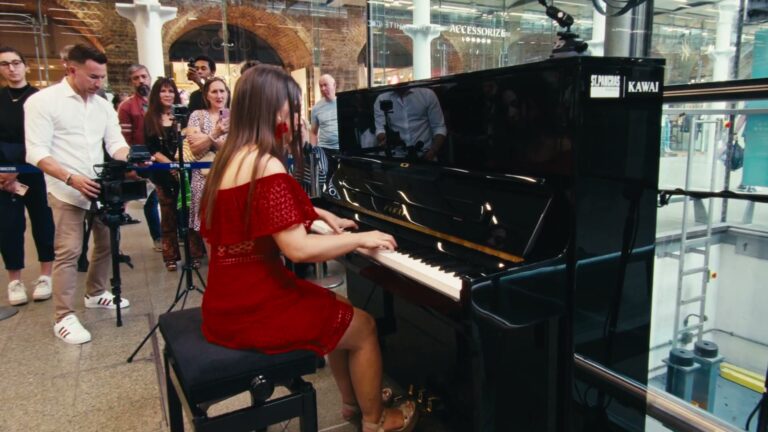
A year of content, filmed in one day.
Kawai UK needed 104 films and had the budget for one filming day. We wrote every script first, then filmed all 104 in eight rooms with two crews.