30th November 2023
Last updated: 8 May 2026 · By Luke Lv, Director, Lumira Studio
Writing a video script is the act of designing what the viewer will see and hear, second by second, before any filming happens. It is the most important and most underinvested stage of video production. Most weak video is not weak filming or weak editing. It is a weak script that production tried to rescue. The good news is that script writing is a craft with repeatable disciplines.
Most business scripts are written to be delivered straight to camera, so it is worth knowing the shape of the talking head video before you write one.
What a video script needs to do
A video script does three jobs simultaneously:
- Tell a story. Take the viewer from where they are at second 0 to where you want them to be at the end.
- Hold attention. Earn each next second of viewing.
- Drive action. Leave the viewer ready to do something specific.
If the script does not do all three, no production budget will save it.
The structure that holds attention
The shape that works for most B2B and corporate video, regardless of length:
Hook (0-7 seconds)
The opening earns the rest. Lead with the most compelling element: the problem the viewer is feeling, the surprising claim, the visible outcome. Not introductions. Not “in this video we will cover…”. The hook is what makes the viewer commit to the next 30 seconds.
Set-up (5-15 seconds)
One sentence on why this matters now, who this is for, and what they will learn or see.
Core narrative (60-80% of total length)
The actual content. Broken into 2-4 distinct sections, each with one clear point. Visual storytelling means each section should have something specific to show, not just say.
Resolution (last 10-15%)
What the viewer should take away. The main point summarised. The promise made by the hook delivered on.
Call to action (final 3-5 seconds)
One specific action. Click, book, reply, share. Multiple CTAs produce no action.
Visual storytelling principles
Three disciplines that separate visual scripts from textual ones:
Show, do not just tell
If the script says “our customers achieve 3x growth”, the video should show a customer achieving it, not a presenter claiming it. Visual evidence outweighs verbal claim.
Use specific imagery
“A team working efficiently” is generic. “An operations director walking through a control room with three screens behind her, calling up a dashboard” is specific. The specific image is filmable. The generic one is not.
Match cuts to content beats
The script should signal where cuts will happen. Each new section, each new shot, each new piece of information. The editor reads the script as a structural document.
Writing for the ear
Video scripts are spoken, not read. Three habits:
- Read every line aloud before locking it. Awkward on the page is twice as awkward on camera.
- Short sentences over long ones. 12-15 words is the comfortable upper bound.
- Active voice, second person. “You see the difference” beats “the difference can be seen”.
Reading aloud catches most of it. Running the draft through a teleprompter catches the rest, because a line that is fine to read can still be hard to deliver while looking down a lens. We built Miracue, a free browser teleprompter, for our own filming days.
Common scripting mistakes
- Starting with introduction. “Welcome to…” or “In this video…” is the slowest possible opening. Lead with substance.
- Trying to teach everything in one video. One job per video. Three short videos beat one long one that covers four topics.
- No clear takeaway. If the viewer cannot summarise the main point in one sentence, the script did not commit to one.
- Visual elements as afterthought. “And then we’ll show some footage of…” Visual planning belongs in the script, not after.
- Writing in the wrong register. Scripts that sound like website copy do not work spoken. Scripts that sound like a presenter actually talking do.
How long should a video script be?
Spoken video runs at roughly 130-150 words per minute when paced for comprehension. So:
- 30-second video: 70-80 spoken words
- 60-second video: 130-150 words
- 3-minute video: 400-450 words
- 5-minute video: 650-750 words
- 10-minute video: 1,300-1,500 words
Pad slightly for pauses, on-screen demonstration, and breathing room. A 60-second script with 200 words feels rushed. With 130 words, it has space.
The relationship between script and visual storytelling
The strongest video scripts are written with picture in mind from the first draft. Two columns side-by-side: spoken word in one, visual direction in the other. What is heard, what is seen, second by second. This forces the writer to consider visual storytelling, not just verbal content. The script becomes the shooting and editing plan, not just the dialogue.
Frequently asked questions
How do I start writing a video script?
Start with the hook. The first 7 seconds set the rest of the script. Write that opening as the most compelling possible version of “why should the viewer keep watching”. Once that lands, the rest of the script flows from it.
How long should a video script be?
For a 60-second video: 130-150 spoken words. For a 3-minute video: 400-450 words. For a 10-minute video: 1,300-1,500 words. Spoken video runs at roughly 130-150 words per minute when paced for comprehension.
What is the most important part of a video script?
The hook (the first 7 seconds). If the viewer has not understood why this matters by 7 seconds in, attention drops sharply. The rest of the script depends on the hook earning the next 30 seconds of viewing.
Should video scripts include visual direction?
Yes. The strongest scripts are written with picture and sound together. A two-column format (spoken word, visual direction) keeps the writer focused on visual storytelling rather than just dialogue.
How do I write video scripts for different platforms?
The structure is similar across platforms. The differences are pace and length. Paid social: hook by second 2, total under 30 seconds. YouTube long-form: hook in 15-30 seconds, total 5-15 minutes. Sales enablement: shaped around a specific question or objection, 60-180 seconds.
Does Lumira Studio write video scripts?
Yes. Scripting is part of our pre-production process across the corporate, training, testimonial, and brand work we produce. Strong scripts are the highest-leverage part of any video project, which is why we treat them as the most important deliverable, not the least.
From the studio
A year of content, filmed in one day.
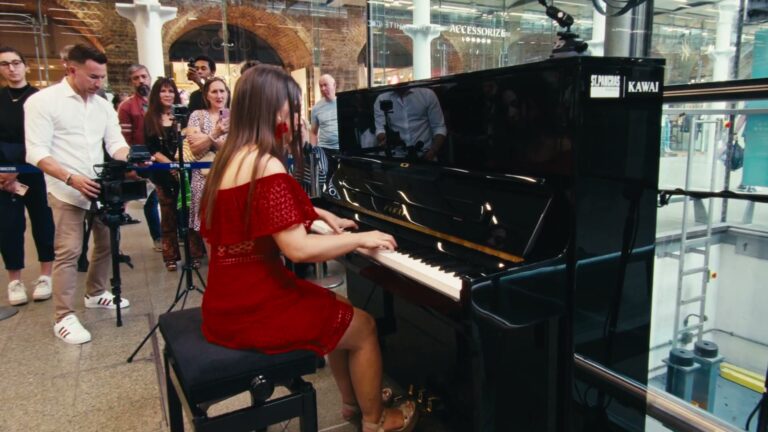
Kawai UK needed 104 films and had the budget for one filming day. We wrote every script first, then filmed all 104 in eight rooms with two crews.