26th November 2026
Last updated: 26 November 2026. Written by Luke Lv, Director of Lumira Studio, previously a news agency and television journalist.
You have been asked to get a video made. Perhaps it is the first one your company has commissioned, or just the first one to land on your desk, and someone wants a budget before there is a brief. This guide is for you.
Video production costs in the UK for a single corporate video usually run between £2,000 and £15,000 before VAT. A short interview or internal update sits at the bottom of that range. A planned company or brand film sits in the middle and upper part. Anything with several filming days, locations, actors or animation goes past £15,000.
The range is wide because “a video” can mean half a day with one camera or a week with a crew of six. Once you know what moves the number, you can take a budget to your manager that you can defend, and make sense of the quotes that come back. You will also find that the money is rarely the hardest part. Getting the right people in the same room on the same day usually is.
What you are paying for
Nearly all of a production budget pays for people’s time, and that time falls into three stages.
Planning. Deciding what the film has to say, who says it, and where and in what order it is filmed. It is usually the cheapest stage, and it decides whether the rest of the money is well spent.
Filming. The number of days multiplied by the number of people on the crew. Cameras, lights and sound kit are normally included in the crew’s day rate rather than charged separately.
Editing. Cutting the film, colour, sound, captions, graphics and a version for each channel. A two-minute film usually takes longer to edit than to film, and every extra version adds time.
So when two quotes for the same brief are thousands of pounds apart, look at the number of days and people first.
What affects video production costs
Filming days and crew size
This is the biggest single line. As a guide, a production company will charge somewhere around £750 to £1,200 a day for one camera operator with equipment, and around £2,750 for two cameras with a dedicated sound recordist. A second day doubles that part of the quote. A half day rarely halves it, because travel and setting up take most of the morning anyway.
Locations and travel
One office is simple. Three sites in different parts of the country means more days, more travel and sometimes overnight stays. We are just outside London, so travel only really comes into it on longer trips, but always ask how a company charges for it.
How many finished pieces you need
A two-minute film on its own is a different job from a two-minute film plus six short cuts for LinkedIn. The extra pieces cost far less when they are planned before the filming day than when they are asked for afterwards.
Who appears on camera
Filming your own colleagues costs nothing extra on the invoice. It costs you something else, which we come to below. Professional presenters, actors and voiceover artists are paid a fee, and often a usage fee on top, which depends on where the film runs and for how long.
Graphics and animation
Simple titles and name captions are usually included. Animated diagrams, product visualisations or a fully animated explainer are priced on the work involved, and can cost as much as the filming.
Typical video production costs in the UK
Typical UK budgets for work made by a production company, before VAT:
| What you are commissioning | Typical budget | What it usually includes |
|---|---|---|
| A short interview, testimonial or internal update | £2,000-£5,000 | A short film built around people talking |
| A filmed conference or event | £3,500-£7,500 | Filming on the day and an edited highlights film |
| A company or brand film | £5,000-£15,000 | A planned, scripted film about the business |
| A campaign across several days or locations | £15,000+ | A set of films, often with presenters, actors or animation |
Add VAT at 20% to all of these. If your organisation reclaims VAT it makes no difference in the end, but make sure the figure you take for approval says whether VAT is in it.
Within each band, a quote near the top usually buys more days and more people, not better equipment.
The costs that are easy to miss
Usage rights
Check who owns the finished films and how long you can use them. With us, they are yours to use on your website, internally and on social for as long as they are useful, with no further fee. Not every company works that way, and paid actors or commercial music can bring limits on where and for how long a film runs. If you want the raw footage too, agree that before filming.
Music
Music has to be licensed for business use. Library music for a year of content is often a few hundred pounds. A well-known commercial track is a different conversation, and rarely worth it for a corporate film. Ask whether licensing is in the quote and what the licence covers.
Revisions
Most quotes include two or three rounds of changes, and after that you pay by the hour or the day. A clear brief, and one combined set of feedback per round, is the cheapest way to stay inside that allowance.
Versions and cut-downs
You might need a widescreen film for the website, a square or vertical version for LinkedIn and Instagram, a 15-second teaser and a version for overseas offices. Each one is more editing. Planned in from the start, they cost little. If you ask later, a cut-down from existing footage is usually priced separately, typically £150 to £400 each.
Subtitles and translation
Captions are worth having on anything that goes on social. English captions are often included. Subtitles in other languages cost extra, priced per language.
Travel, overtime and expenses
Mileage, train fares, parking, overnight stays and days that run long. Ask how each is charged and whether there is a cap.
The hardest part is getting people to the shoot
Ask anyone who has organised a shoot what the difficult part was, and it is rarely the budget. It is the people.
The managing director has a board meeting that week. The two engineers you need are out on site. The customer who agreed to a testimonial wants plenty of notice and a reminder. Rooms have to be booked, the office warned, and someone has to tidy the warehouse. All of it falls to you, usually on top of the rest of your job, and none of it appears on a quote.
Once you have done that, you will not want to do it all again next month for the next video. So when everyone is finally in one place, get as much from the day as you can.
Measure the cost per piece, not per video
Most budgets are set one video at a time, and that is the most expensive way to buy video, in money and in your time. The crew, the setting up, the diaries you cleared and the hour each person gives on camera cost much the same whether the day produces one film or twenty.
A rough illustration, using the figures in this guide. Say a filming day and the edit for one company film come to £5,000. That is £5,000 for one piece. Plan the same day to also capture nineteen short pieces for social, and the filming hardly changes; what you add is editing, at perhaps £150 to £400 a piece. The total rises to somewhere between £8,000 and £12,500, and the cost of each piece falls to roughly £400 to £600.
The saving in your own time is bigger still. Twenty pieces from one day means one round of chasing diaries, one set of room bookings and one hour from your managing director, rather than a new shoot to organise every time someone asks for a video. Posted over a few months, that day keeps working long after a single film would have been seen and forgotten.
It only works if the pieces are planned before the day: what each one says, who says it, and where it is filmed. With a planned running order, each person can be given a set time, say their pieces and get back to work, which makes them far easier to persuade. Footage shot for one film rarely cuts into twenty good ones afterwards. That planning is how we run our corporate video sessions, and it is the reason a programme of filming days usually costs less per piece than the same films bought one at a time.
It also makes the spend easier to justify to whoever signs it off. Judge it by what the content does over the months it is used, such as enquiries, shorter sales calls or hours of training saved, not by what one film cost on the day. For training films, the video ROI calculator shows how quickly the hours saved pay back the cost.
Timber Connection’s library of more than fifty films came from six planned filming sessions across a year.
If you are planning your first shoot and want to know how much one day could hold, book a discovery call.
Other ways to get more from the same budget
Film video and photography in the same visit. If the website or a brochure needs new photography, taking it on the same day saves booking a second crew and asking your colleagues for their time twice.
Settle sign-off before the filming day. Agree who reviews the edit, and in what order. On a first project this is the step most often missed, and a senior person who sees the film for the first time at the final cut can send it back to the start.
Match the finish to the audience. A film for investors needs more polish than a monthly update for the sales team. If you are not sure which film you need, this tool sorts fifteen formats by what they are for.
How to brief and compare quotes
A brief does not need to be long. On a first project it mostly needs to say:
- the one job the film has to do, and who it is for
- where it will be shown, and which versions you need
- the deadline, and any fixed date it is tied to
- who signs it off
- your budget, or at least a range
The budget is the line people most often leave out, and it matters most. Given a budget, a production company can tell you what that money will honestly buy. Without one, three companies guess at three sizes of project, and the quotes cannot be compared. Our video brief questionnaire walks through all of it.
When the quotes come back, compare them line by line:
- filming days, and who is on the crew
- editing days, and what you get at the end: how many films, how long, which versions
- how many rounds of changes are included
- music licensing and usage rights
- captions and subtitles
- travel and expenses
- whether VAT is included
If one quote is far cheaper than the rest, find out which of those lines is missing. One question worth asking every company is what they would cut if the budget were a third lower. The answer tells you how they think about your project. There is more on choosing a company in How to Hire a Video Production Company and how to choose a video production package, and on building a team instead in In-House vs Outsourced Video Production.
What one planned day can hold
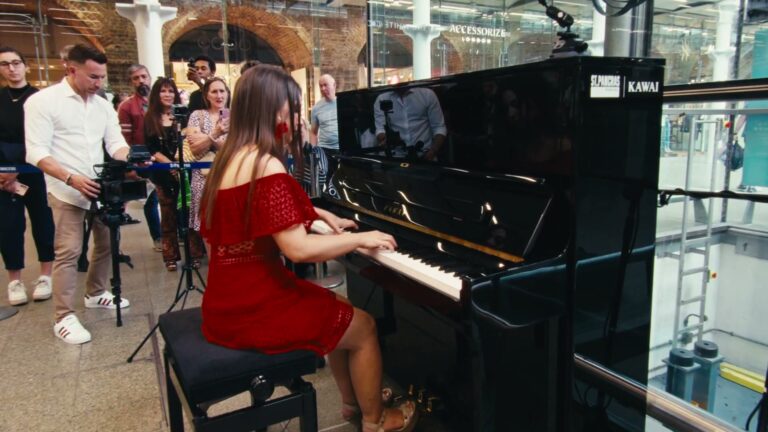
Kawai UK wanted to post twice a week through the whole of 2026. That meant 104 pieces of content, and the budget allowed one filming day. We wrote all 104 scripts before anyone picked up a camera, found a building with eight rooms and filmed with two crews, 52 films each. All 104 were edited within the month, including feedback, and subtitled for Kawai’s other markets. Read how the day was planned.
If you are planning your first shoot and have a budget to set, or a quote you want a second opinion on, book a discovery call. We will talk through what you need, and a fixed written quote follows.
Frequently asked questions
How much does a two-minute corporate video cost in the UK?
A simple interview-led film of about two minutes usually costs £2,000 to £5,000 before VAT. A planned brand film of the same length is more often £5,000 to £15,000. Length matters less than the days and people involved.
Why do quotes for the same brief vary so much?
Because each company has assumed a different amount of work: one filming day and one film, or two days, a larger crew and six social versions. Ask each to list days, crew, deliverables and revision rounds, and the gap usually explains itself.
Is it cheaper to make several videos at once?
Per video, almost always. The filming day is the expensive part, and a well-planned day can produce a main film and a run of shorter pieces for little more than the extra editing. It also means organising one shoot instead of several.
How do I get colleagues to turn up for a shoot?
Give them the date early, ask for a set time rather than the whole day, and tell them in advance what they will be asked to say. Most people are far happier to give twenty planned minutes than an open-ended morning.
Who owns the footage?
It depends on the contract, so check before you sign. With us the finished films are yours to use with no further fee, and raw footage can be handed over if agreed before filming. Paid actors or commercial music can carry limits.
How long does a corporate video take to make?
Planning usually takes one to two weeks, longer if several people need to agree the message. Editing then takes a few weeks. In practice, internal sign-off usually sets the timeline more than the production does.
From the studio
A year of content, filmed in one day.
Kawai UK needed 104 films and had the budget for one filming day. We wrote every script first, then filmed all 104 in eight rooms with two crews.