Manufacturing · Product Video · Video Case Study/Testimonial
Unisort: two customers, two sectors, and the case studies that sell the next one
Kingston University and Arbuthnot Latham, filmed as sales assets for a manufacturer whose product advantage is far easier to show than to explain.
- Client
- Unisort
- Sector
- Manufacturing, recycling systems
- What we made
- Two customer films, product and educational pieces
- Period
- One filming day per customer
The starting position
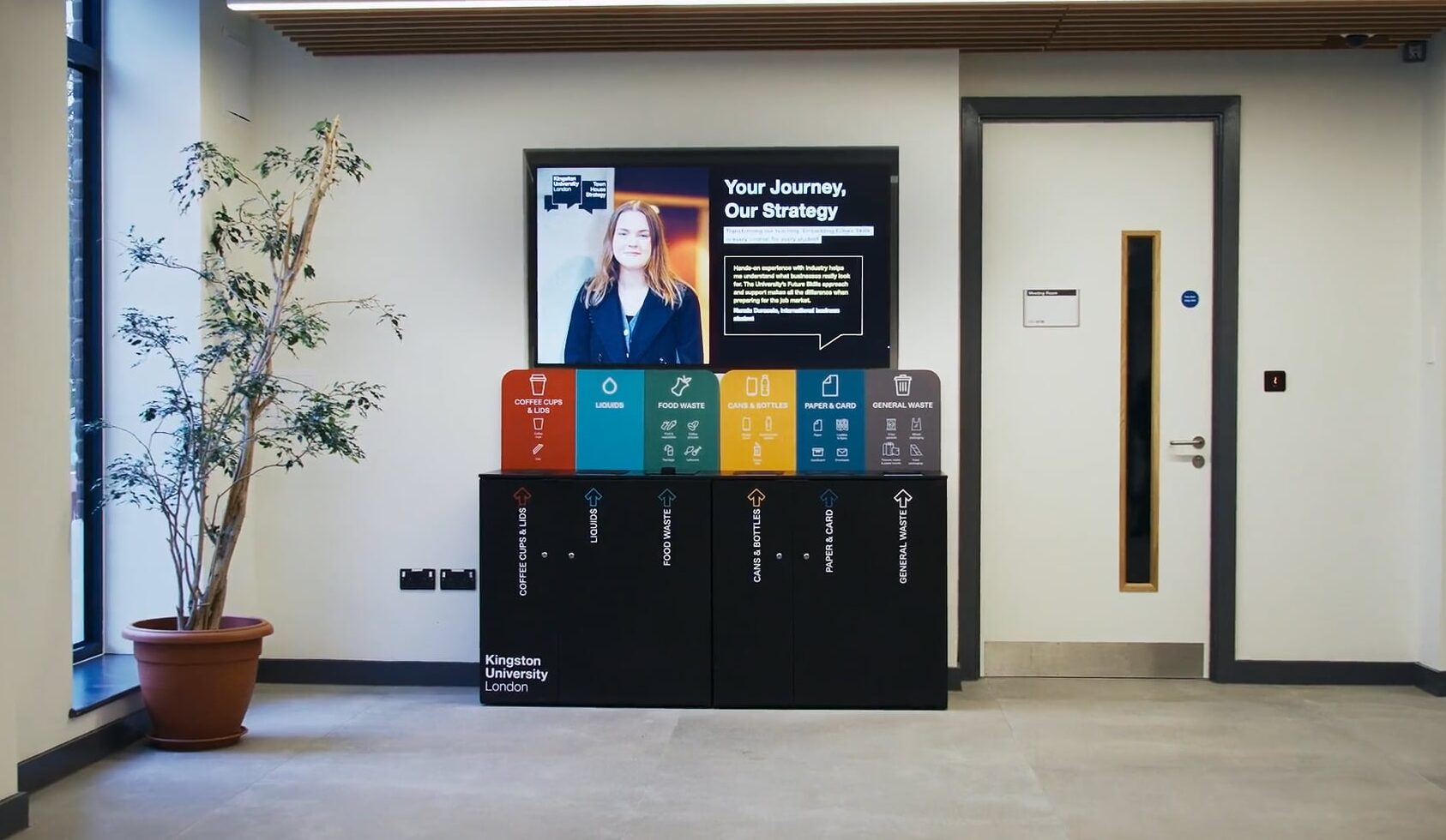
Unisort design and manufacture recycling bins to a considerably higher standard than the usual moulded plastic: more waste streams, clear instructions, and icons drawn for each customer’s own setting. They supply British Airways, Costa, universities and colleges.
Unisort is our client. Kingston University and Arbuthnot Latham are theirs. Both films were made as sales assets, to be shown to the next buyer in the same sector, and the two sectors needed completely different arguments.
Kingston University: the example the sales team did not have
Unisort had already won work in higher education by the time they came to us. What they did not have was one example they could put in front of the next university. That sector buys carefully, and a reference customer carries more weight than any brochure.
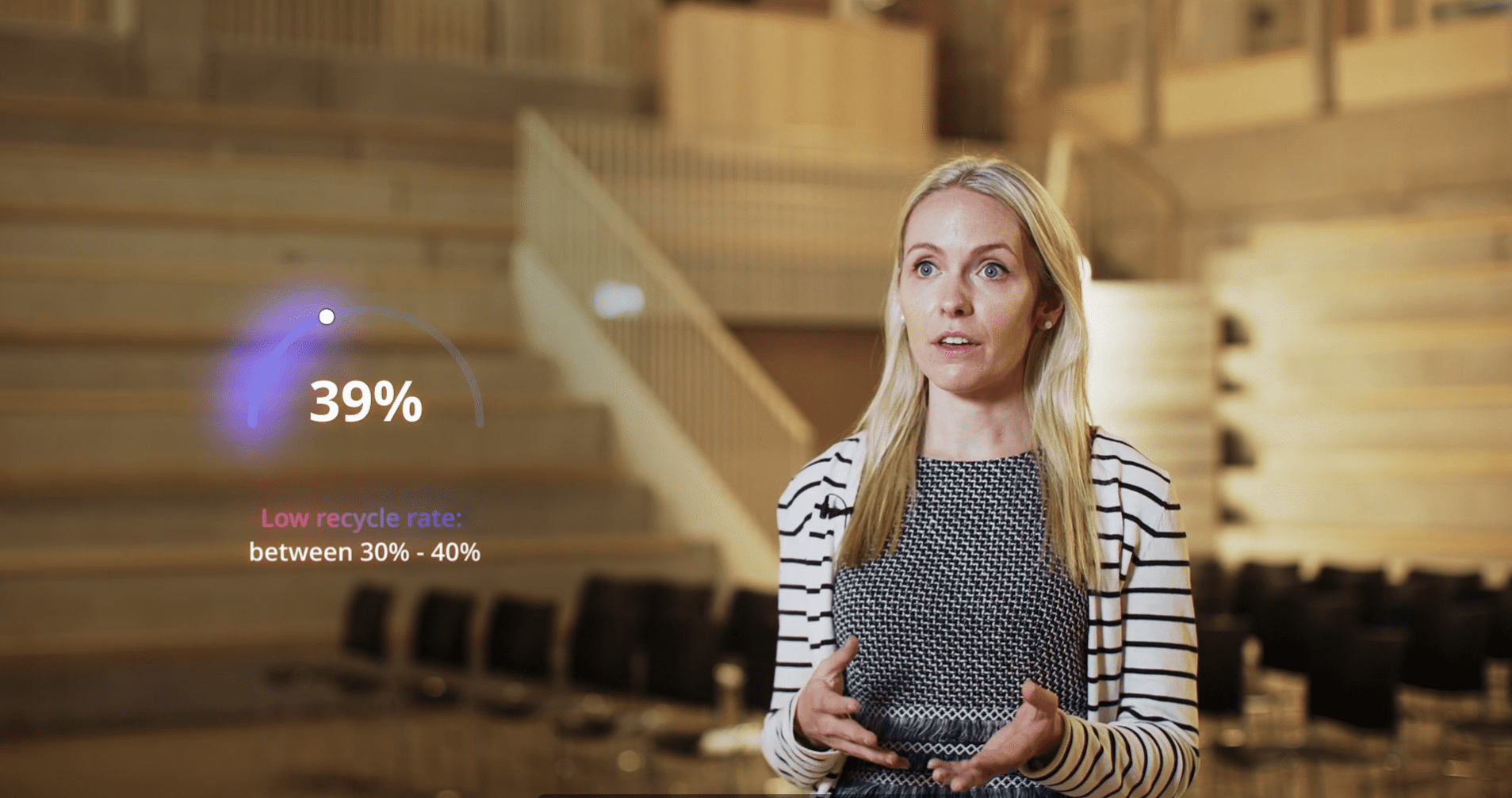
Kingston was the right one to build it around. They take environmental performance seriously and they had a problem worth describing: waste stations that were not working, high contamination, and staff and students often unsure what could be recycled. On camera, the university puts the recycling rate before the change at “around 30 to 40%”.
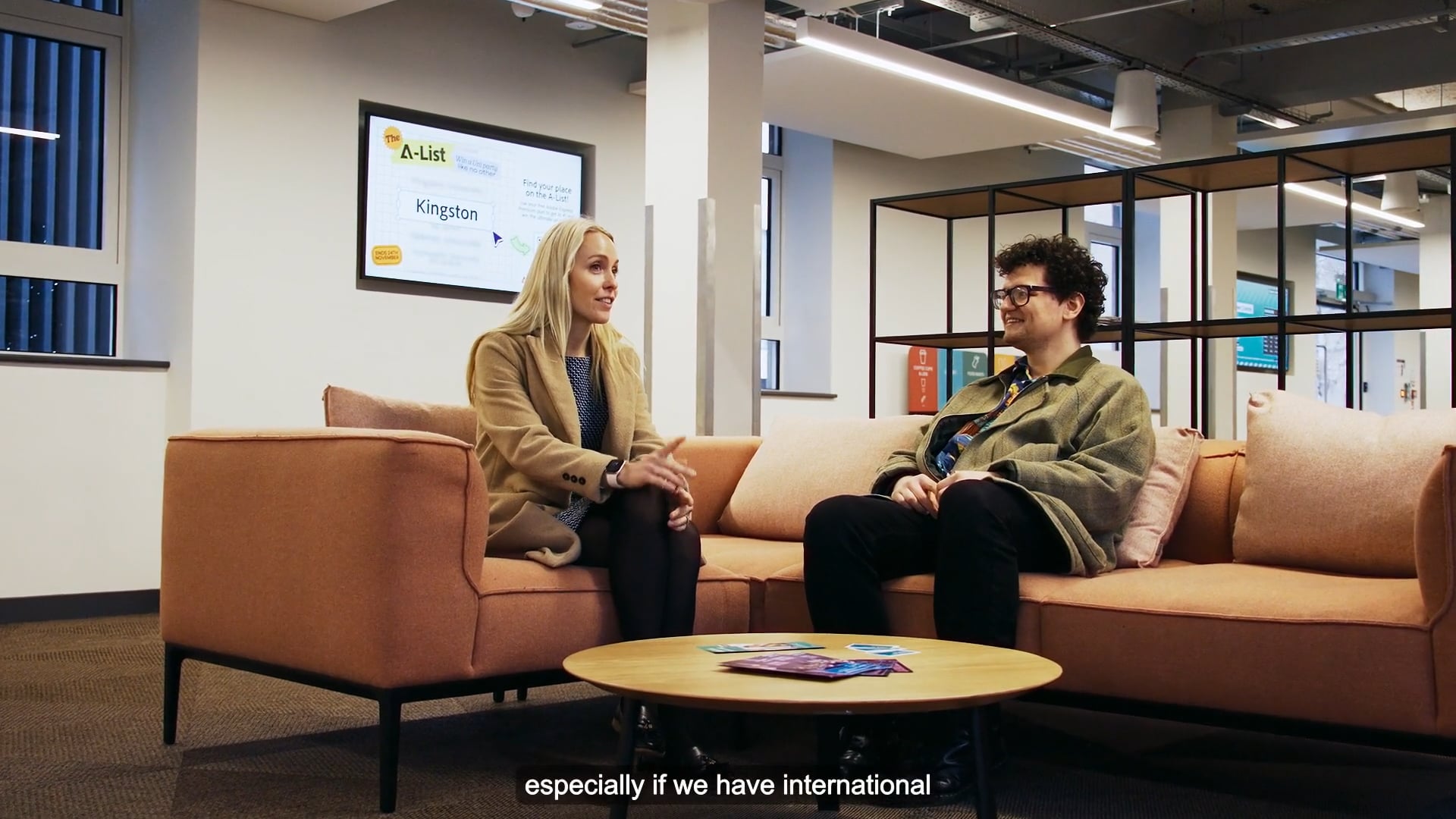
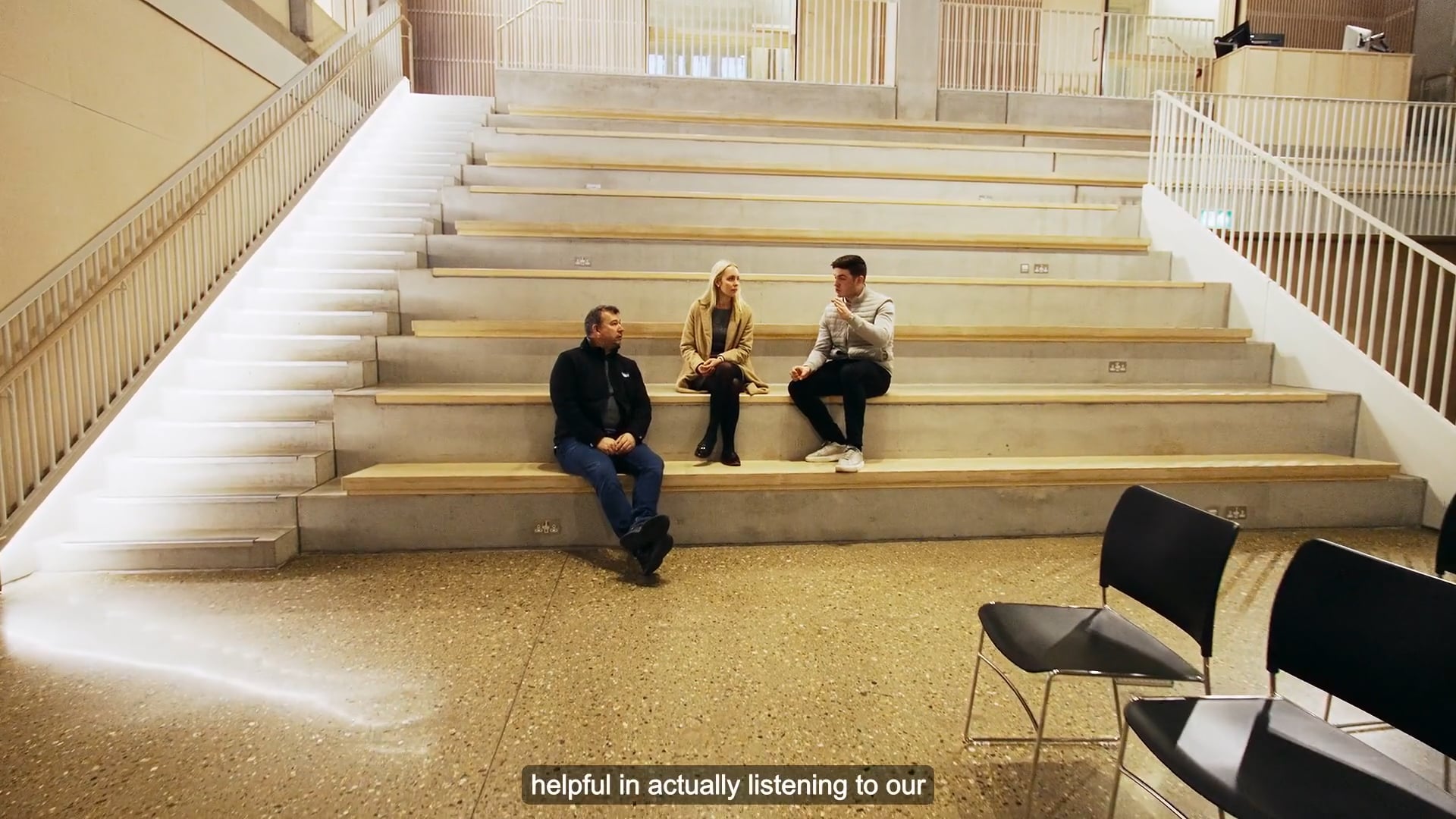
One filming day, with two things to get. The first was the buying decision, told by the people who made it: the project lead who ran the review, and the facility managers who live with the result. A university does not buy on one person’s say-so, so we covered why Kingston approached Unisort, what the design process was like, what happened to collections and compaction afterwards, and how students responded.
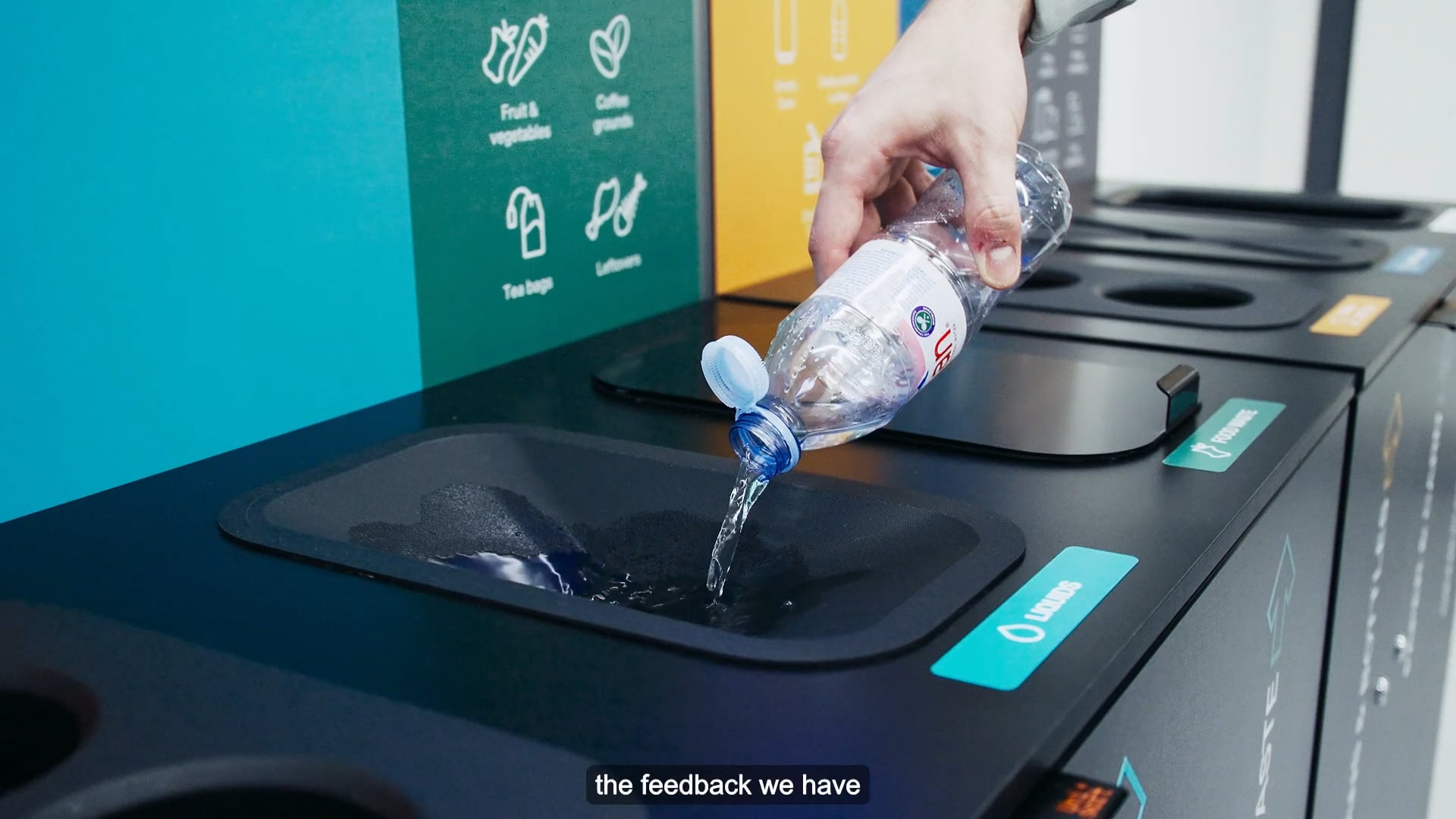
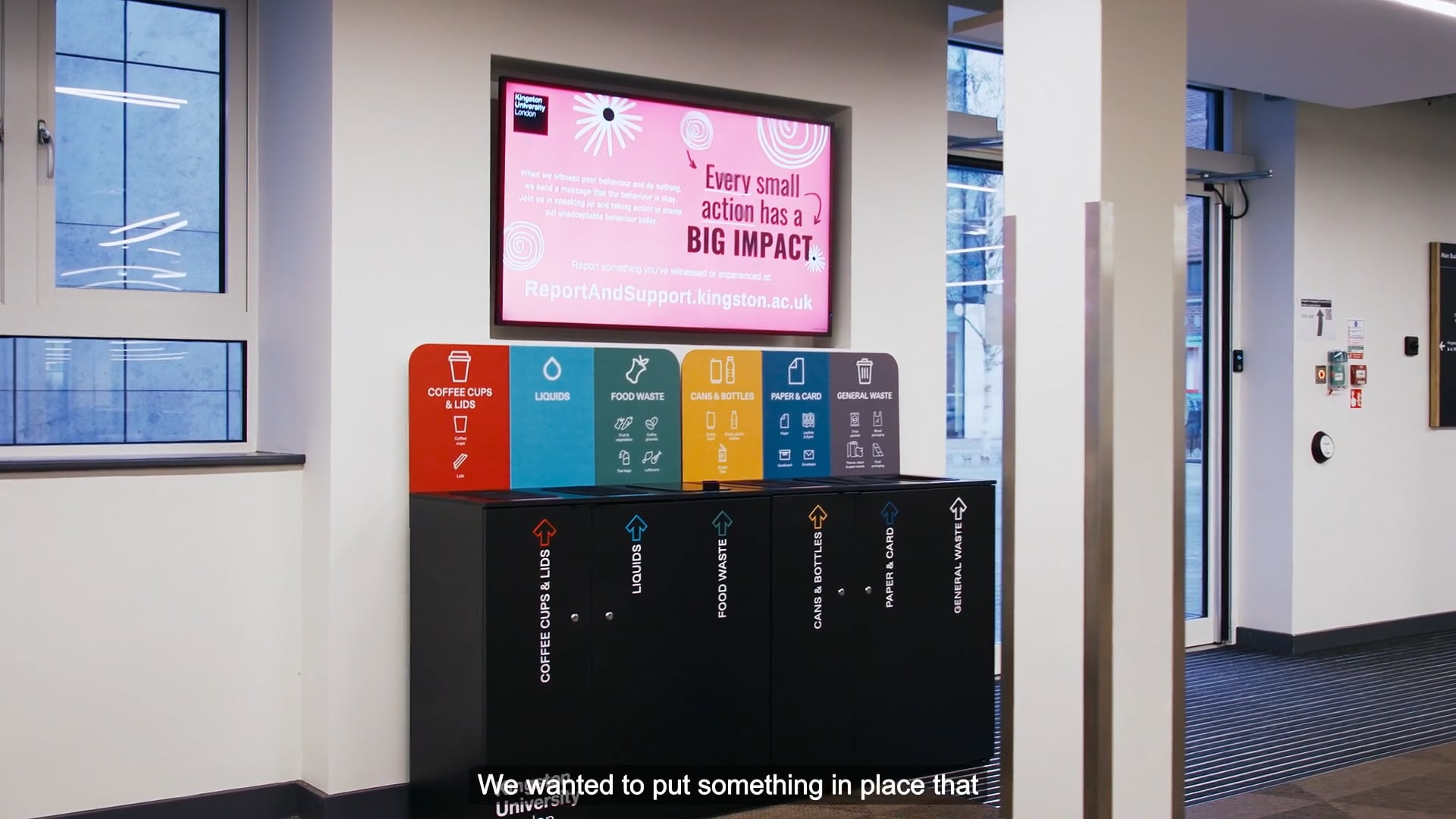
The second was the product. Unisort shape each aperture to the waste it is meant to take, so a coffee cup will not physically go into the paper tray. That is hard to land in a line of copy and takes about two seconds to understand on film, so the range of aperture shapes got a sequence of its own.
The best evidence is what Kingston did next. They made the Unisort design their standard specification, circulated to architects and project managers so that new builds and refurbishments are now drawn around the bins. Other institutions and students’ unions began asking Kingston about them. And the closing line of the film is a buying signal in its own right: “we really look forward to buying some more.”
The most valuable thing anyone says in it, though, is Kingston explaining that Unisort listened to their problems before proposing anything. Unisort could have written that sentence about themselves and nobody would have taken much notice. A customer says it once on camera and it works in every sales conversation afterwards.
Arbuthnot Latham: a bin a private bank is happy to leave on show
Private banking was a sector Unisort wanted more of. Arbuthnot Latham is a high-end private bank whose buildings are carefully designed, where every element has been chosen deliberately. The bins were the exception: ordinary grey and green plastic, standing out against everything around them.
The brief was units that would not read as bins at all. They had to sit within the existing decor, be measured to the space, and still be strong, quick to service and straightforward to install.
One filming day and two interviews, with the people responsible for the building and for the cleaning team. On camera, Arbuthnot Latham describe an increase in recycling and a reduction in the plastic used around the business. They put the drop in contamination down to the clear backboard and door graphics. They describe the cleaning team saving a meaningful amount of time, because a liner can now be lifted and tied when it suits rather than waiting for a bin to fill. And they say the work brought the building into line with the new recycling legislation.
One detail settles the whole brief. The bank does not hide the bins, and does not move them out of the way when guests are coming.
The supporting pieces
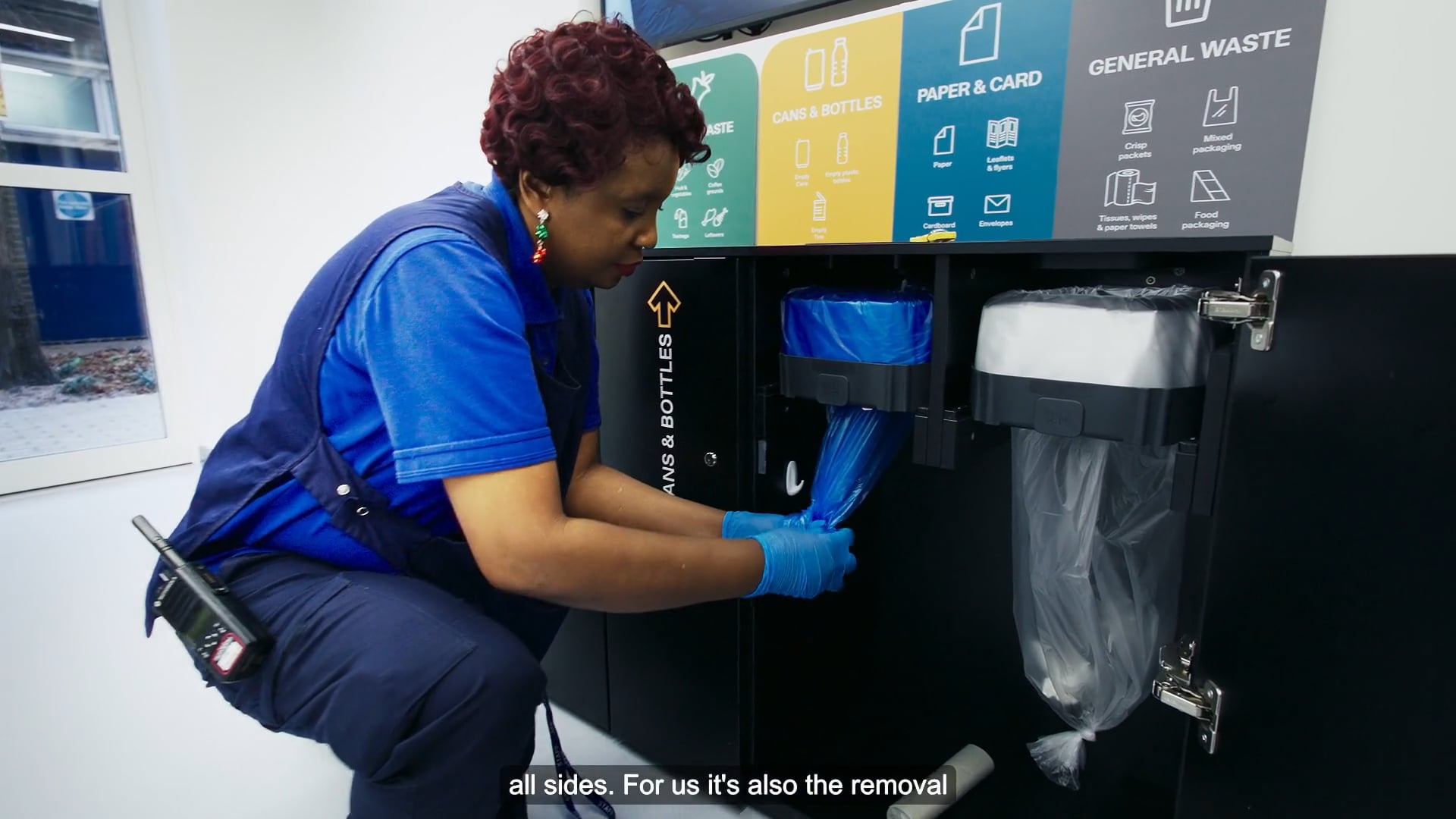
Two shorter items came out of the same programme. The first is a speed comparison on liner changes, a traditional bin against the Unisort unit, which settles in a few seconds a point that matters enormously to a facilities manager and never appears on a specification sheet.
The second is a short educational series. A pizza box looks recyclable, but once sauce has soaked into the board it will not be processed. A takeaway coffee cup looks like paper, but the plastic lining cannot be separated economically. These are things people believe they are already getting right, and filming the explanation gave Unisort something useful to send a prospect well before any conversation about buying.
Two customers, two different arguments
For a university, the question is whether another university has done this and what happened afterwards. For a private bank, it is whether the thing will look right in a building somebody has spent properly on, and whether the cleaning team will thank you for it.
When the advantage of a product is far easier to show than to explain, and when the person you need to convince would rather hear it from someone like themselves, that is when a filmed customer story earns its cost.
Gallery
Stills from the shoot.
7 photographs



Want results like these?
A discovery call is a short conversation about your goals and what a content system could do for them.
Book a discovery call